Choosing between a studio and a location is often framed as a visual preference: studio for clean images, location for atmosphere. That distinction is too simple to be useful.
A studio and a location create different working conditions. They affect light, privacy, wardrobe changes, sound, weather exposure, movement, crew size, schedule and the number of variables that must be solved during production. Either can produce restrained or highly constructed images. Either can feel natural or artificial.
The decision for a fashion photography production in Barcelona should begin with the image purpose and the way the team needs to work, not with the assumption that one setting is more creative than the other.
1. Define what the environment must contribute
The setting can perform several different roles.
It may need to:
- disappear so face, body, clothing or product remains primary;
- provide a specific architectural or cultural context;
- create depth and movement around the subject;
- support controlled beauty and garment detail;
- make a portrait feel personal rather than generic;
- allow a constructed light or color treatment;
- give a campaign a recognizable sense of place;
- support several deliverables within a limited schedule.
These functions lead to different choices. A location is not automatically useful because it is visually impressive. A studio is not automatically neutral because it has four walls and controllable light.
Before comparing options, describe what would be missing from the images if the environment were removed. If the answer is nothing, the production may not need the logistical cost of a complex location. If architecture, weather, public space or a specific interior carries part of the story, a studio imitation may weaken the concept.
2. What a studio actually provides
The central value of a studio is control and repeatability.
Light can be built, adjusted and repeated without waiting for sun direction or cloud movement. Background, color and material can be chosen against wardrobe. The team has a stable base for makeup, hair, garment preparation, tethered review, equipment, charging and backups.
Studio is especially useful when the production needs:
- consistent lighting across several looks;
- precise beauty, jewelry or garment detail;
- privacy for the model or client;
- efficient wardrobe and grooming changes;
- protection from weather and public interruption;
- a clean background for flexible crops or layouts;
- constructed light, projection, color or set elements;
- motion and stills produced from one controlled base.
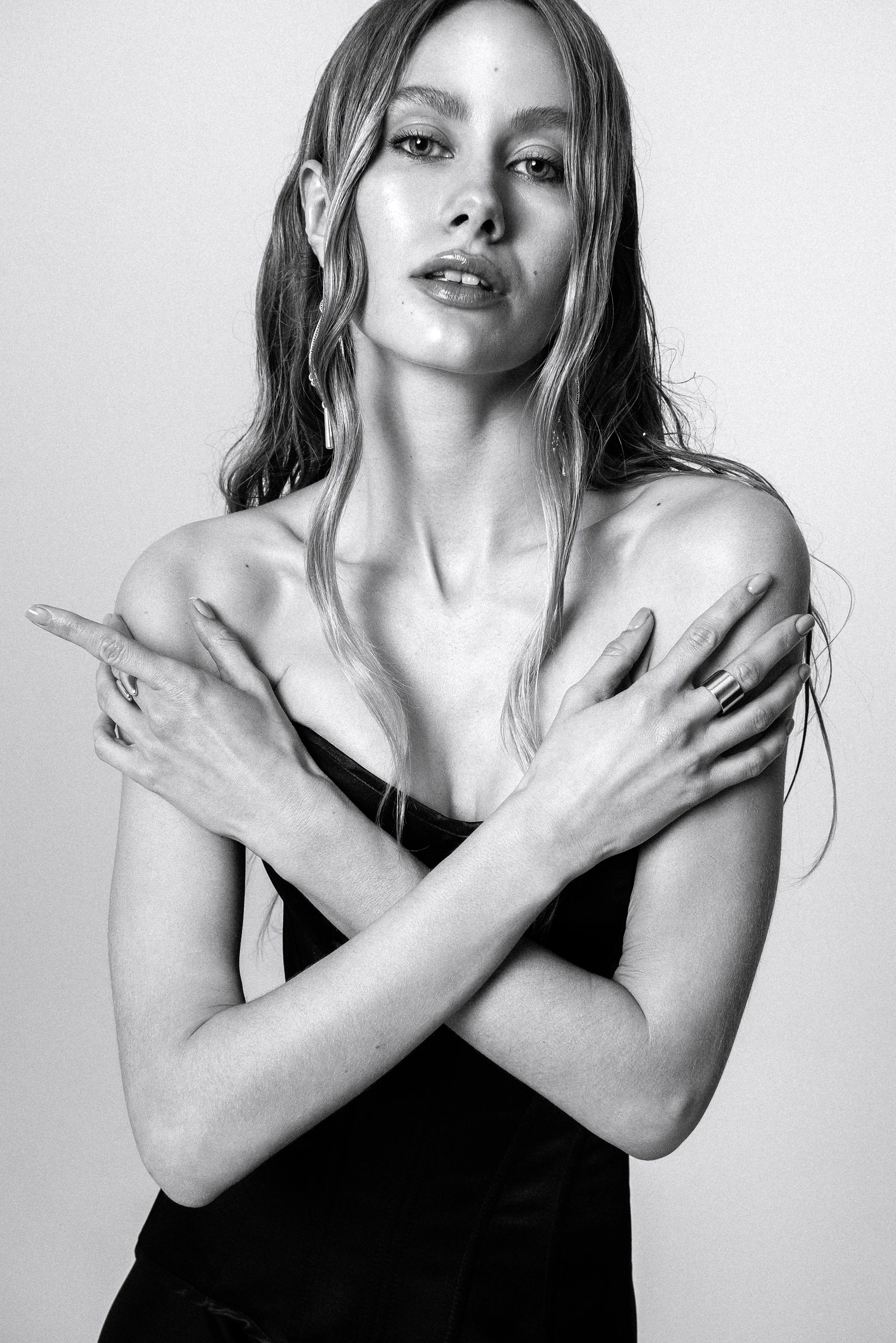
The Kriss Studio archive record uses a direct monochrome environment where gesture, face and styling carry the frame. In Through the Light, the studio becomes something else entirely: light is treated as an active material that transforms the figure and creates the image world.
Control does not mean that production becomes effortless. Studio work still requires time for lighting changes, set handling, wardrobe, beauty and review. A larger equipment list can also encourage unnecessary complexity. Every technical choice should remain accountable to the image.
3. What a location can add
A location offers information that cannot always be recreated efficiently: real scale, architecture, surface, distance, changing light and the behavior of a subject inside an existing world.
Location is useful when the story needs:
- recognizable or meaningful context;
- movement through space rather than movement on a fixed mark;
- natural depth and changing distance;
- available light with a specific time-of-day character;
- an interior connected to the subject or brand;
- urban, coastal or landscape atmosphere;
- a less formal environment for a natural model test or portrait.
The Paloma Barcelona go-see works with available light and a limited urban environment. The location supports movement and immediacy without becoming more important than the model.
This balance matters. Architecture can quickly dominate the frame. A beautiful location can reduce styling clarity, complicate full-length images or make the production look like travel content when the intended focus is fashion or portraiture.
4. Barcelona offers range, not automatic relevance
Barcelona compresses several visual registers into a relatively small production area: graphic modern architecture, historic streets, residential interiors, industrial surfaces, dense urban space, open coast and nearby landscape.
That range is operationally useful, but it can also encourage location collecting. Moving through several places may create variety while weakening the continuity of the final edit.
For each proposed Barcelona location, review:
- how the light behaves at the planned time;
- whether public access or private permission is required;
- where the team and wardrobe can be based;
- privacy and comfort for the subject;
- sound and pedestrian conditions if motion is included;
- transport, loading and equipment limits;
- safe space for garment and beauty changes;
- weather exposure and a realistic backup plan;
- whether the environment supports the intended audience and usage.
Permit and access requirements depend on the exact property, public space, footprint and production activity. They should be verified for the selected location rather than assumed from a previous shoot.
5. Calculate the real cost of movement
Location variety is not free, even when access itself costs nothing.
Every move includes packing, transport, parking or unloading, walking, re-establishing light, checking the background, preparing wardrobe and rebuilding team concentration. A short distance on a map can consume a meaningful part of the shooting day.
When evaluating a schedule, distinguish between:
- camera time;
- setup and lighting time;
- beauty and wardrobe changes;
- location movement;
- access or permit windows;
- breaks and basic team care;
- review, backup and contingency time.
A studio may have a visible rental cost but protect more of the day for image-making. A free exterior location may require additional assistance, transport, weather contingency and fewer usable wardrobe changes. The useful comparison is total production impact, not venue price alone.
6. Match privacy and support to the subject
Privacy changes performance.
A public street can produce useful energy for an experienced model and create pressure or self-consciousness for someone less comfortable being watched. It can also be inappropriate for sensitive wardrobe, close beauty work, a private client or a portrait that needs emotional concentration.
Studio provides a clearer boundary around the session. A private interior location can offer the same protection while adding personal context, but the team still needs suitable space for clothing, mirrors, equipment and quiet preparation.
For creative portrait photography in Barcelona, this decision should follow the person as closely as the visual reference. The environment needs to help the subject become present, not force a performance that belongs to the location.
7. Consider wardrobe, beauty and continuity
Fashion production depends on what happens outside the frame.
Several looks may require rails, steaming, garment protection, accessories, shoes, makeup continuity and a private changing area. Wind, dust, heat, rain and public surfaces can change the condition of clothing and hair before the intended frame is made.
For one compact look, a location workflow can remain light. For a multi-look editorial, the lack of a stable base can reduce both efficiency and final consistency.
Continuity matters when the images must read as one story. Changing weather or mixed location light can be part of the visual language, but it should be intentional. If several frames must match for a campaign layout or product sequence, controlled light may be the more reliable system.
8. Use a hybrid production only when it creates a second chapter
A hybrid plan combines studio and location, or uses a controlled base with one nearby exterior environment.
This can work when the final sequence genuinely needs two registers: for example, precise product or beauty frames followed by movement and wider context. It is less useful when the second setting exists only to increase the number of backgrounds.
A hybrid plan needs a clear transition point, realistic travel time and protected essential frames. Complete the images that cannot be compromised before moving into the less predictable part of the day.
9. Decide through the final usage
The destination of the images should resolve many apparent aesthetic debates.
Lookbook or collection clarity
A studio or controlled interior often supports repeatable full-length framing, garment comparison and consistent crops.
Editorial story
Either system can work. The choice follows narrative, publication format, sequence and the relationship between styling and environment. See the longer guide to producing an editorial fashion shoot in Barcelona.
Campaign
The setting must support brand identity, product visibility and all agreed channels. A location may give the campaign a recognizable world; a studio may create more adaptable image architecture for several placements.
Model portfolio
Natural location light can support movement and presence. Studio can provide clean digitals, controlled full length and beauty. The portfolio gap should decide, as explained in the agency-ready portfolio guide.
Creative portrait
Studio can isolate gesture and constructed light. Location can add personal context, architecture or movement. Echo of Light demonstrates that atmosphere can also be built around the subject rather than found outside.
What to include in the first brief
To evaluate studio and location options, share:
- the project type and intended image use;
- the number of looks and expected final images;
- still, motion or both;
- team size and roles already confirmed;
- wardrobe, beauty and changing requirements;
- preferred Barcelona areas or visual references;
- privacy and accessibility needs;
- fixed dates and delivery deadline;
- the practical production range;
- whether a weather backup is required.
The right environment usually becomes clearer once those facts are placed beside the visual direction.
To discuss the production, use the fashion and campaign inquiry path.