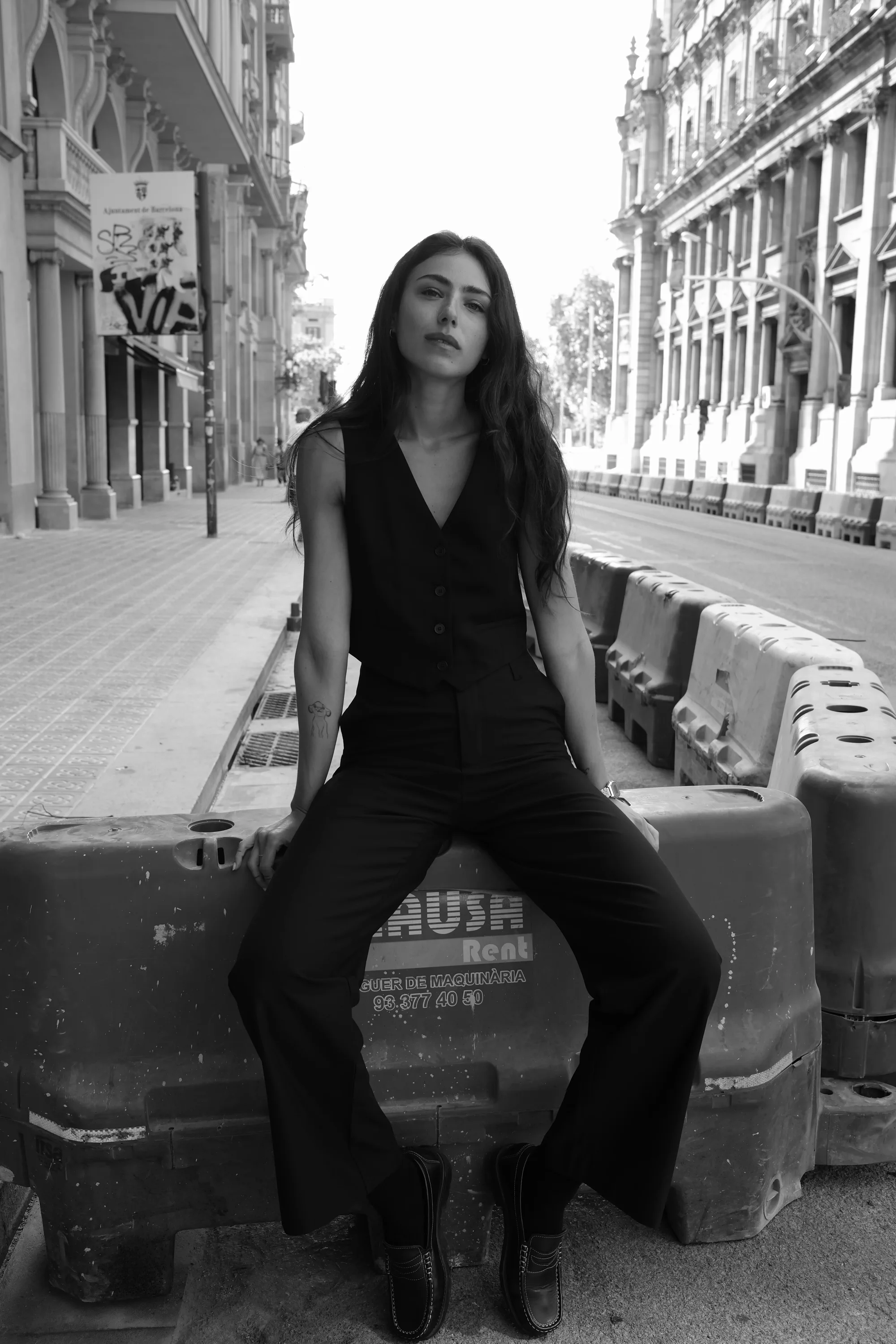
A model portfolio is often treated as a collection that simply needs more photographs. That is rarely the most useful starting point. The better question is what the current material allows an agency, casting team or client to understand, and what important information is still missing.
For a new face, the immediate need may be clean digitals and one natural test that shows presence without hiding behind production. For a working model, the need may be a precise update: stronger movement, a convincing beauty frame, a different emotional register or material that moves the book toward a particular market.
The purpose of an agency-oriented model portfolio session in Barcelona is therefore not to manufacture an identity. It is to present the model clearly and build evidence of range without losing the person inside the styling.
1. Define the next professional use
Before choosing references, establish what the images are meant to do.
Possible goals include:
- approaching agencies for the first time;
- providing current digitals after a visible change;
- developing a new-face book beyond basic snapshots;
- replacing older work that no longer represents the model;
- demonstrating movement or expression that the current portfolio lacks;
- adding beauty, commercial or editorial range;
- preparing material for a specific casting context.
These goals are related, but they are not interchangeable. A clean agency introduction should not be buried under heavy styling. An editorial update should not simply repeat the neutral frames already in the book.
No portfolio can guarantee agency representation or paid work. Agencies make decisions according to profile, market, timing, roster needs and many factors outside a photographer’s control. The portfolio can only make the model easier to understand and evaluate.
2. Audit the current material before planning a shoot
A useful portfolio review looks for repetition and absence.
Several strong close portraits may still leave the viewer with no idea how the model moves. Several styled editorials may show production value but not current appearance. A large book can feel narrower than a small one when every image uses the same expression, crop and light.
During the audit, ask:
- Is the model’s current face, hair and body clearly represented?
- Are there clean front, profile and full-length views where needed?
- Does the book show posture and proportion without visual distraction?
- Is there believable movement rather than only held poses?
- Are expression and emotional range visible?
- Do the strongest images support the kind of work being pursued?
- Which photographs repeat information already established?
- Are older images creating confusion about current appearance?
The answers determine the session. They also prevent spending time and budget on another version of an image the portfolio already contains.
3. Understand digitals, natural tests and editorial tests
These formats have different jobs.
Agency digitals
Digitals document current appearance with minimal intervention. They normally prioritize a clear face, profile, full length and proportion. Clothing is simple, grooming is restrained and retouching should not alter identifying features or body shape.
Requirements can vary between agencies and markets. If an agency has supplied its own current instructions, those should guide the capture list and delivery.
Natural model test
A natural test adds photographic direction while keeping the model visible. Light, clothing and location remain controlled enough to reveal posture, movement, expression and camera awareness. The Paloma Barcelona go-see shows how available light and a limited environment can hold attention on presence rather than production scale.
Editorial test
An editorial test can introduce stronger fashion, beauty, character or atmosphere. It is most useful when it adds a missing register to the book. It should still show what the model contributes to the image, not only what the creative team built around them.
A single session can sometimes combine formats, but only if time, styling and expectations remain realistic. Digitals made after a long beauty setup are no longer functioning as clean digitals.
4. Build images with distinct functions
A portfolio session should not become a mechanical pose checklist. It helps, however, to understand the information different frames can carry.
A focused sequence may include:
- a direct close portrait with clear eye contact;
- a profile or three-quarter view;
- a full-length frame that shows proportion and posture;
- simple movement through walking, turning or transitions;
- a quieter image with less performance;
- an expression or gesture outside the model’s default range;
- one stronger fashion or beauty direction when it serves the goal.
Not every portfolio needs every item. The value lies in difference of function, not difference for its own sake.
5. Keep styling legible
Wardrobe should help the viewer read the model and the intended direction.
For digitals and natural tests, simple fitted pieces, neutral layers and clean footwear are often more useful than a large selection of trend-led looks. Clothing should reveal line and proportion without creating an unintended costume.
An editorial test can support stronger styling, but each look still needs a reason. Shape, texture and color should relate to the model, light and portfolio gap being addressed.
It is better to agree a compact wardrobe plan before the session than to arrive with many disconnected options. This also protects time for direction and image-making. Buying new clothes before the production plan is defined is rarely necessary.
Grooming follows the same principle. Skin, hair and makeup can remain natural or become more constructed according to the brief, but clean portfolio material should not disguise current appearance.
6. Direction should develop awareness, not dependence
Many new models believe they need to arrive with a complete vocabulary of poses. A productive test does not require that.
Direction can begin with simple physical actions: shifting weight, changing the line of the shoulders, walking through a mark, turning into light, allowing hands to settle and moving between expressions rather than holding one fixed face.
The aim is not to memorize a sequence that works only with one photographer. It is to develop awareness of posture, lens, light, clothing and transitions.
For more experienced models, direction should identify habits that have become repetitive. The session can then create controlled pressure toward a different pace, gesture or emotional distance while keeping the result believable.
7. Choose Barcelona studio or location deliberately
A daylight location can be efficient for a natural test and can give the model space to move. It also introduces public attention, changing light, weather and fewer private options for wardrobe or grooming.
A studio offers privacy, repeatable light, clear backgrounds and efficient control over digitals, beauty and full-length frames. It may be the better choice when the session needs several precise outputs or when privacy and changing space are important.
The environment should follow the needed material. A visually impressive Barcelona location does not improve a portfolio if architecture overwhelms the model or reduces the number of useful frames.
8. Select for clarity and range
Selection is part of the portfolio strategy.
Near-duplicate images make a book feel uncertain. The final edit should preserve the strongest version of an idea and then move to a frame that contributes different information.
Useful selection criteria include:
- current and recognizable appearance;
- posture, expression and presence;
- garment and body line;
- technical quality;
- difference from existing portfolio material;
- relevance to the intended agency or casting conversation;
- coherence with the rest of the delivered sequence.
Retouching should be restrained for portfolio work. Temporary distractions can be handled, but permanent features, skin texture, body shape and proportion should not be transformed into something the model cannot reproduce in person.
9. Treat portfolios for models under 18 as a separate responsibility
For any model under 18, a parent or legal guardian must be involved throughout planning, communication and production.
The session should remain age-appropriate in styling, grooming, language, posing and intended image use. There should be no adult fashion direction, pressure-based posing or ambiguity about who is present and how the images may be used.
Privacy, comfort and the ability to stop or change direction matter more than completing a shot list. Agency goals do not override safeguarding.
What to send before booking
A useful first inquiry can include:
- age and city;
- current agency status, if any;
- a link to the existing book or recent unedited snapshots;
- agency guidance already received;
- the material needed: digitals, natural test, editorial update or a combination;
- relevant dates or casting deadlines;
- preferred studio or location context;
- guardian contact and involvement for anyone under 18.
This is enough to review the current position and decide whether a shoot is useful now, which format is appropriate and what the session should avoid repeating.
To discuss a Barcelona session, use the model portfolio inquiry path. Related examples include Daria Dan, Blessing and Paloma Barcelona.